Why Knitting Circles Make Perfect Settings for Murder Mysteries
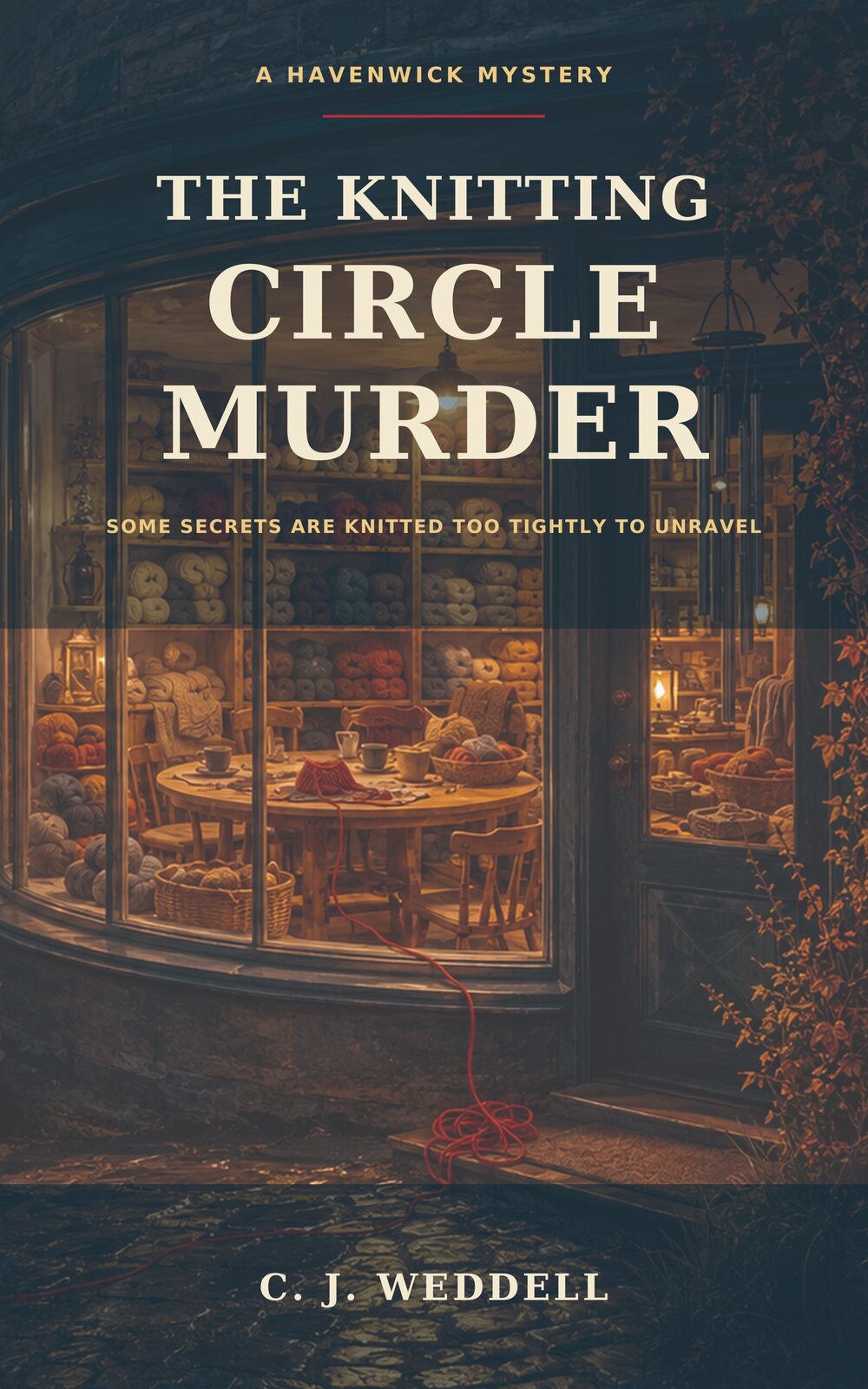
Five chairs stand around the Tuesday table. By the end of the afternoon, only four stories still make sense.
That is the central tension behind The Knitting Circle Murder, my British cosy mystery set in the seemingly peaceful village of Havenwick. A wool shop should be one of the safest places imaginable: warm, familiar and filled with the steady rhythm of people making things together.
It is also an almost perfect place to hide a murderer.
Knitting circles naturally bring people close. They create routines, loyalties, rivalries and years of shared history. Everyone knows who arrives early, who always takes the same chair and who has suddenly stopped mentioning a particular name.
When something breaks that routine, even the smallest detail can become evidence.
A ready-made closed circle of suspects
The strongest traditional mysteries often begin with a limited group of people who cannot easily escape one another.
A country house gathers guests beneath one roof. A train traps strangers between stations. A village knitting circle does something subtler: it brings the same people together every week until familiarity begins to resemble trust.
But familiarity is not the same as innocence.
Members of a long-established group know one another’s habits, families and weaknesses. They know which subjects are safe, which grudges are supposedly forgotten and which version of an old story has become accepted through repetition.
That gives a mystery writer a closed circle without needing a locked door. The suspects remain close because their lives are already tangled together.
Cosiness makes the darkness sharper
Cosy mysteries work because danger enters a world the reader wants to spend time in.
The tea is hot. The wool shop is welcoming. The conversation moves easily between village news, family complaints and the project currently refusing to behave. Then one detail changes the atmosphere.
An empty chair.
A pair of scissors in the wrong place.
A dropped stitch made by someone who never makes mistakes.
The contrast matters. Murder in an obviously threatening place confirms what we already feared. Murder inside a comforting ritual makes every familiar object feel newly uncertain.
In The Knitting Circle Murder, the warmth is genuine. The friendships, dry humour and shared history are not disguises placed over a crime scene. They are the things placed at risk when suspicion enters the room.
Knitting already speaks the language of clues
Mystery fiction is filled with patterns, loose ends and stories that unravel. Knitting turns those metaphors into physical objects.
A strand can connect two places. A colour can carry meaning. A handmade item records decisions in every row: where the maker changed direction, repaired a mistake or deliberately concealed one.
That does not mean every clue must involve a coded scarf or a message hidden in a jumper. The real value lies in attention.
Experienced knitters notice tension, repetition and interruption. Good amateur detectives do the same. They look at the version of events everyone else has accepted and ask where the pattern changed.
A fair-play mystery should allow the reader to notice that change too.
Village life remembers more than official records
Havenwick is fictional, but its social machinery will feel familiar to anyone who has lived in a small British community.
News travels through shops, clubs and conversations that were never officially meetings. People remember who helped during a difficult winter, who left without explanation and which family has spent years pretending an argument never happened.
This collective memory can solve a crime, but it can also protect one.
A village does not keep a single version of its history. It keeps dozens. One person remembers an insult. Another remembers an act of kindness. Somebody else has repeated a rumour so often that it now feels like evidence.
The members of the knitting circle understand those overlapping accounts because they have lived among them. Their challenge is deciding which memories matter—and which have been shaped by loyalty, guilt or fear.
Older women make formidable investigators
Older female characters are too often treated as background figures: kindly neighbours, comic gossips or convenient witnesses.
A knitting circle places them at the centre.
Years of work, family life, disappointment and community involvement produce a kind of knowledge that official investigators may not possess. These women know how people behave when they are embarrassed, frightened or trying too hard to appear helpful.
They are not invisible to one another, but they may be underestimated by everyone else.
That creates an ideal amateur investigation. They can ask questions without sounding like detectives, recognise small changes in behaviour and enter social spaces where authority would immediately make people cautious.
Their experience does not make them infallible. Friendship can cloud judgement just as easily as it sharpens observation. The person most capable of identifying a lie may also have the strongest reason to forgive it.
Friendship raises the cost of the solution
A murder mystery always asks who committed the crime. The more interesting question is often what solving it will destroy.
When suspects are strangers, the detective can expose the truth and leave. A close-knit group cannot.
Every accusation changes a friendship. Every discovered secret forces the investigators to reconsider years of shared experience. Even the truth can feel like betrayal when revealing it harms someone who once protected you.
That emotional cost gives The Knitting Circle Murder its darker edge. The case is not separate from the women’s lives. Solving it means pulling at the same bonds that have held the group together.
Some knots tighten when disturbed.
Others were never secure in the first place.
The pleasure of a fair-play cosy mystery
A fair-play mystery makes an agreement with the reader: the essential clues will be available before the solution.
The answer should surprise, but it should not depend on information revealed only at the final moment. Once the truth is known, earlier scenes should look different without becoming dishonest.
A knitting circle is perfect for this structure because its conversations are full of apparently ordinary detail. A comment about a delivery, a changed appointment or an unfinished project can sit naturally beside more obvious evidence.
The reader is invited to listen as carefully as the investigators.
Which detail is harmless village chatter?
Which is a lie?
And which becomes important only when placed beside something said three chapters earlier?
What kind of book is The Knitting Circle Murder?
The Knitting Circle Murder is an original British cosy mystery combining:
- a suspicious death inside a Northumberland wool shop
- four friends drawn into the investigation
- fair-play clues
- village secrets
- dry humour
- darker psychological suspense
- questions of guilt, loyalty and silence
It is written for readers who enjoy traditional whodunits, amateur sleuths and mysteries where character matters as much as the final reveal.
The knitting circle is cosy.
The murder is not.
Where to read The Knitting Circle Murder
If you enjoy village mysteries, closed circles of suspects and clues hidden inside everyday conversation, discover The Knitting Circle Murder and read the full description.
You can also browse all adult mysteries and thrillers by C.J. Weddell.
For a darker mystery rooted in Victorian medicine and the missing history behind Dracula, read what happened to Lucy Westenra after the accepted story ended.
Some secrets are knitted too tightly to unravel.